dissertation
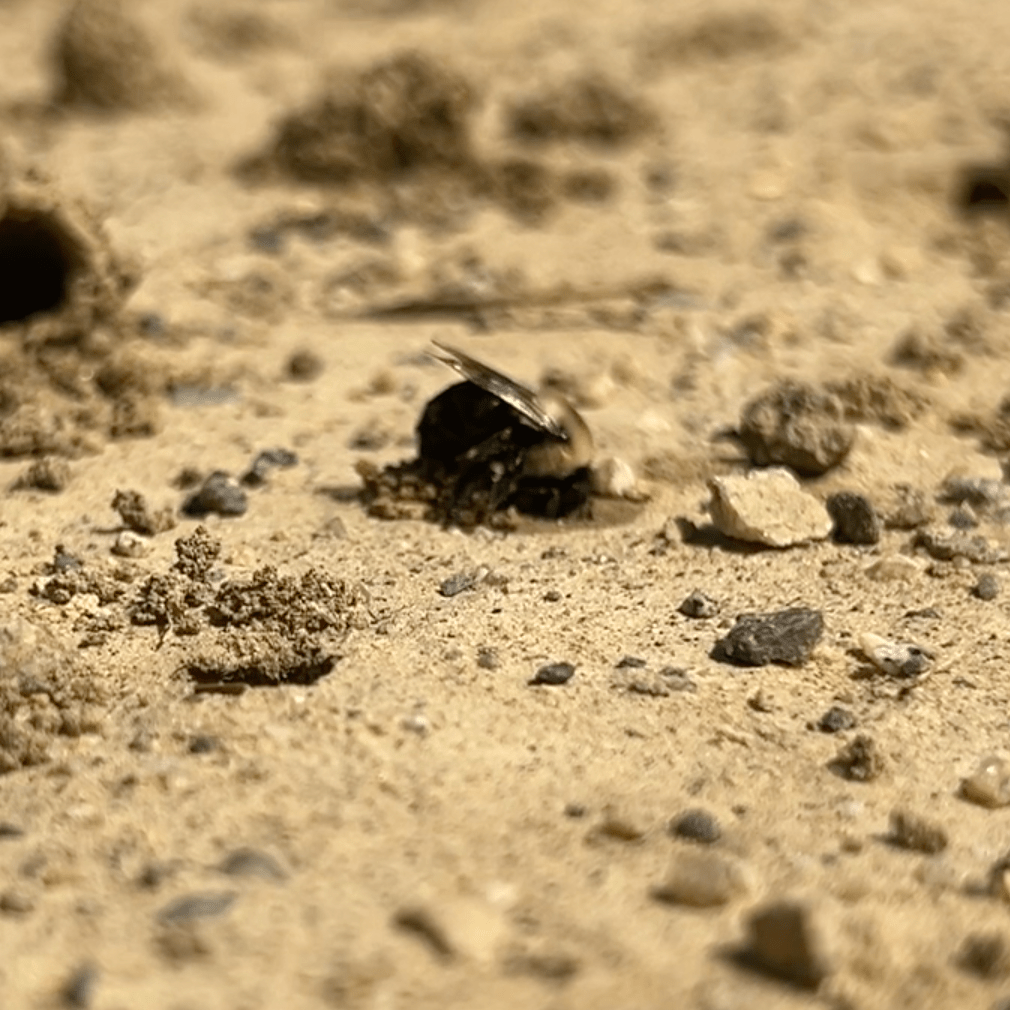
My dissertation research is interested in nest building and the behaviors associated with them in bees. I am focused on the relationships between nesting cost (how much time it takes them to build a nest), group-living (living close to others of the same species), and parasitism (how often we see successful parasitism in these bees). To look at these ideas, I work with the Chimney Bee, Anthophora abrupta.
study system: Chimney Bee, Anthophora abrupta
“At a busy season when many of these huge bees are bustling about with very audible hum and zip, the entire village with its many wonderful towers and industrious citizens form a spectacle which is in itself quite capable of overawing any but the most unemotional individual.” (Rau, 1929a)
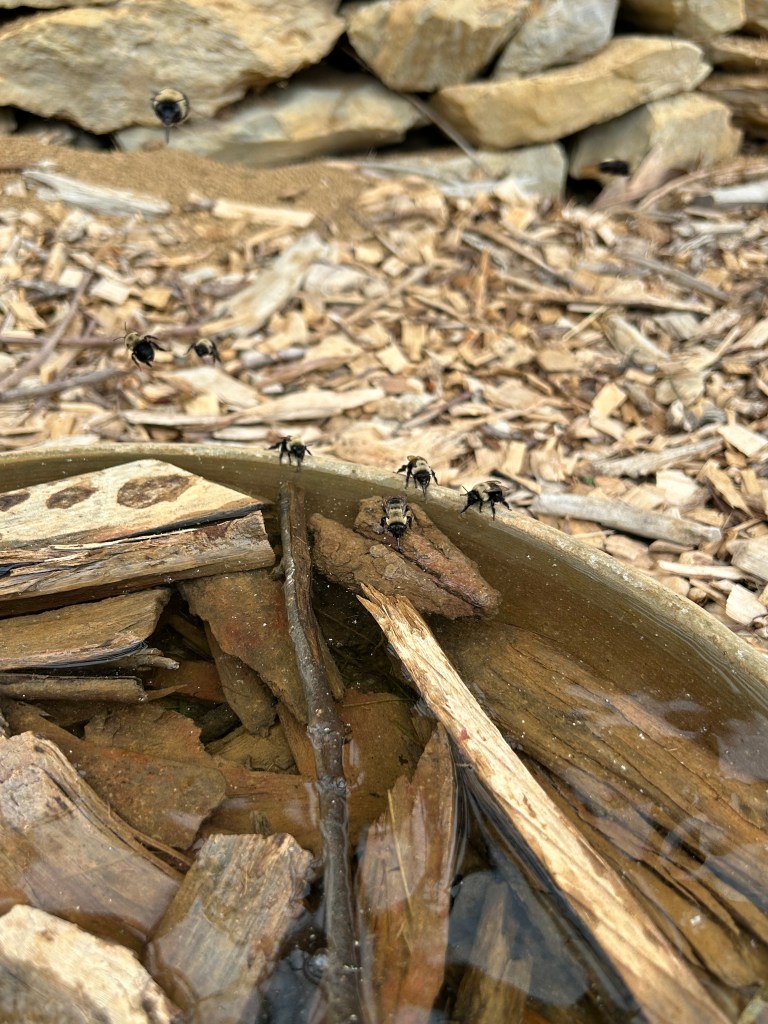
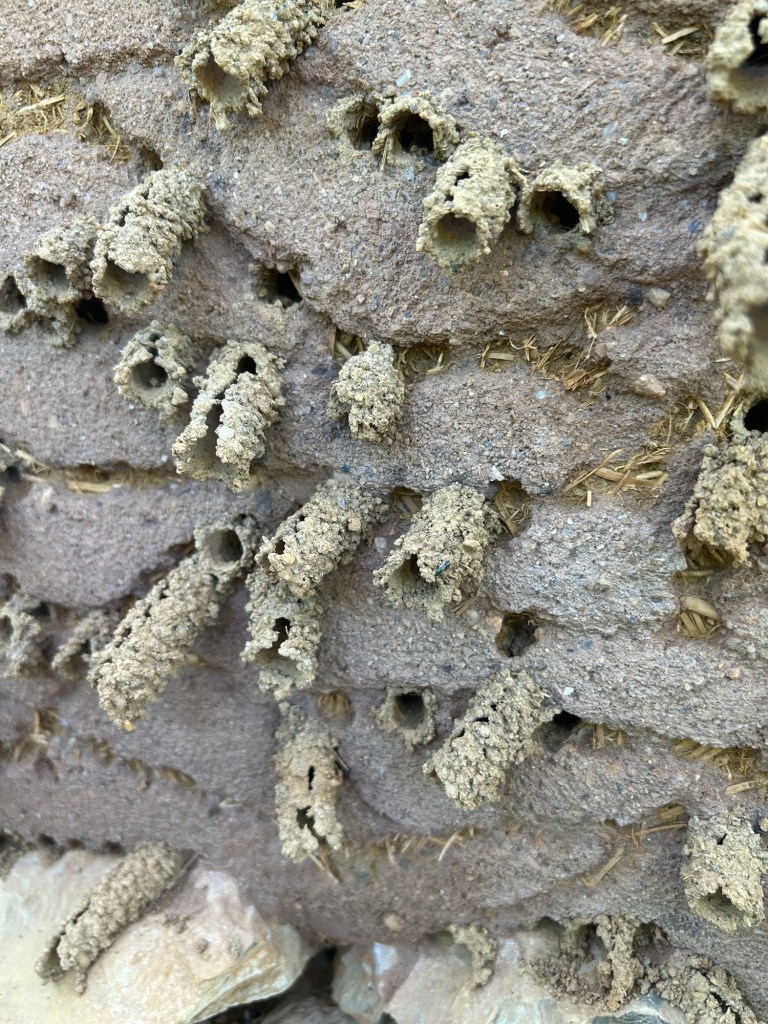
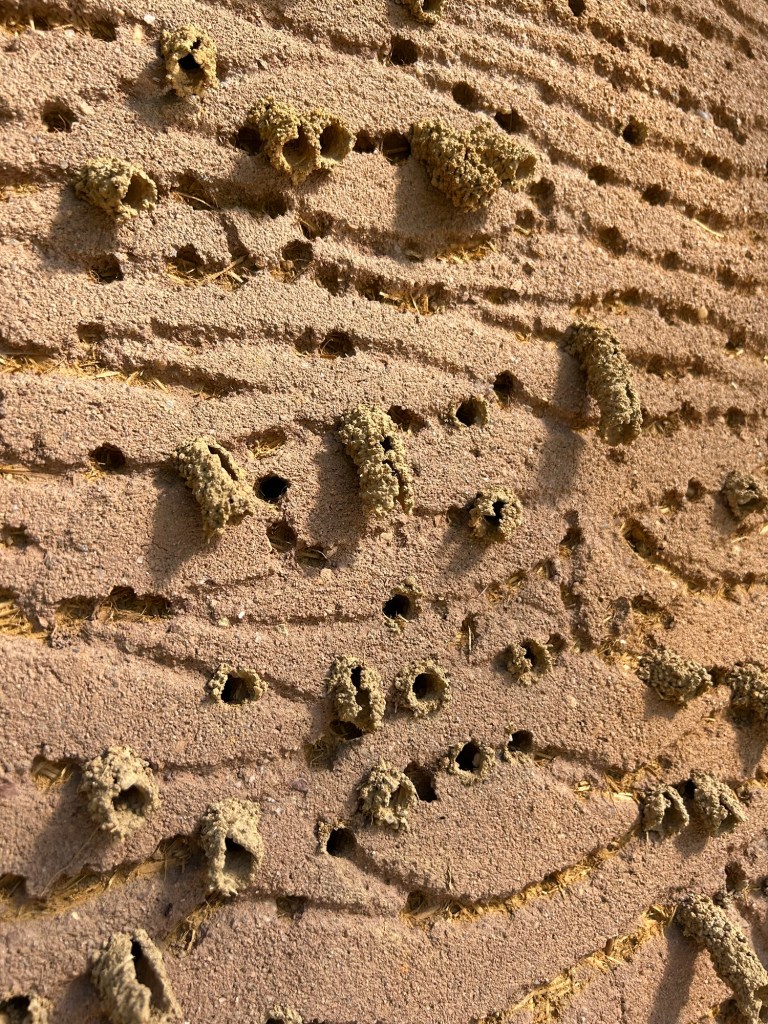
The Chimney Bee or Anthophora abrupta is a species of bee in the family Apidae, making them related to familiar bees like Bumble Bees and Honey Bees. Unlike Honey Bees and Bumble Bees, Chimney Bees are solitary. They nest in the ground in large aggregations and only have one generation per year. The aggregations they form can be long lived, maintaining consistent occupation for over thirty years and ranging in size. They nest in both vertical and horizontal substrates, making their homes in river banks, up-turned trees, and close to anthropogenic structures. The substrate they nest in is very hard, so they collect water to wet and soft the soil so they can excavate it. A. abrupta are commonly called “chimney bees” or “turret bees” because of the unique turret-chimney-like structures they build at the front of their nests. The chimneys are built by utilizing the excavated soil produced as they dig the nesting cavity. The soil is formed into small pellets that are then cemented together to form the “chimney” extension of their nest.
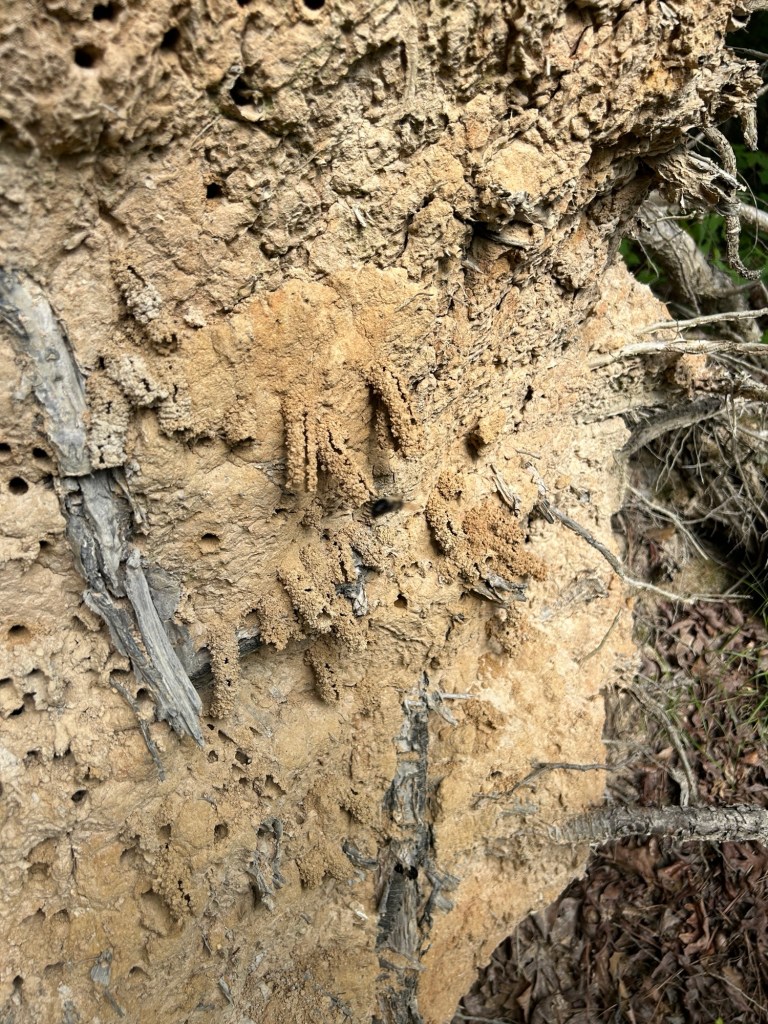
Chimney Bees are generalist pollinators, meaning the pollinate all kinds of flowers during their active period. They even pollinate a lot of the fruits and vegetables that we like to eat! Additionally, they are one of the pollinators of rare lady slipper orchids, an endangered group of plants native to the eastern US. Like many pollinators, they are vulnerable to many different threats like pesticides and lack of habitat. You can do your part to protect Chimney Bees and the great diversity of other native pollinators by planting native flowers, creating suitable habitat, and not using pesticides. To learn more about protecting native pollinators and find guidelines specific to your region, I reccomend checking out the Xerces Society Resource Center.
parasites:
What are parasites? Parasites are a type of organism that live in or on a host species and inherently cause harm to the host organism. This life style is incredibly diverse with lots of different strategies, from eating the hosts food, to the host themselves. The strategies go on and on!
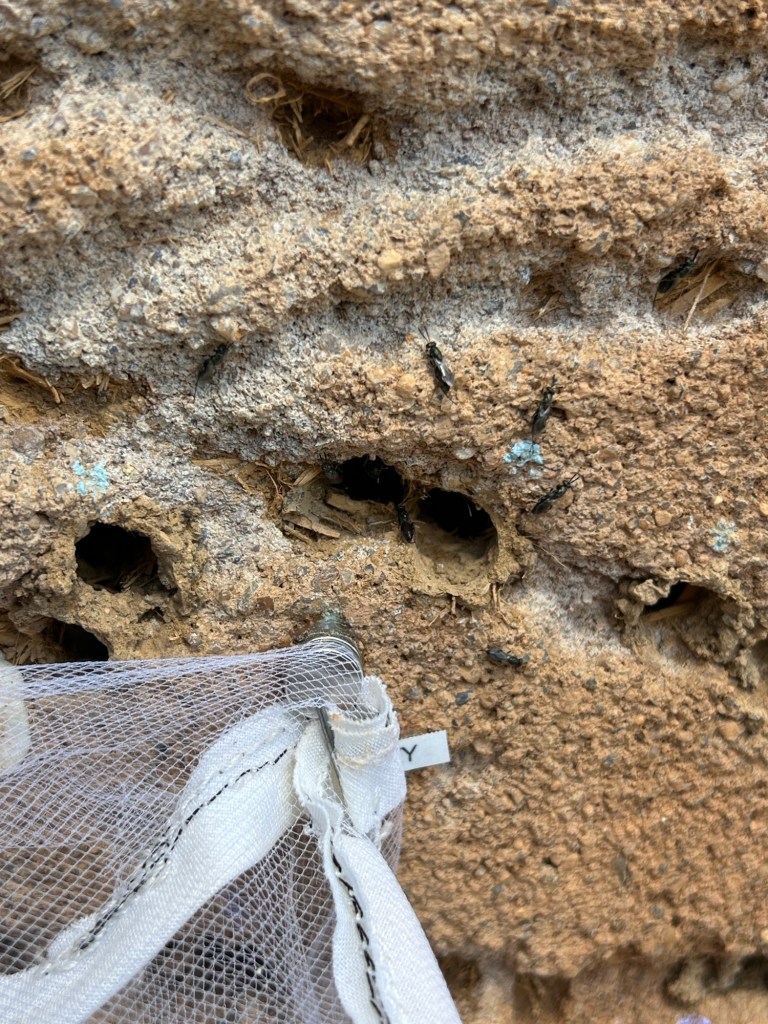
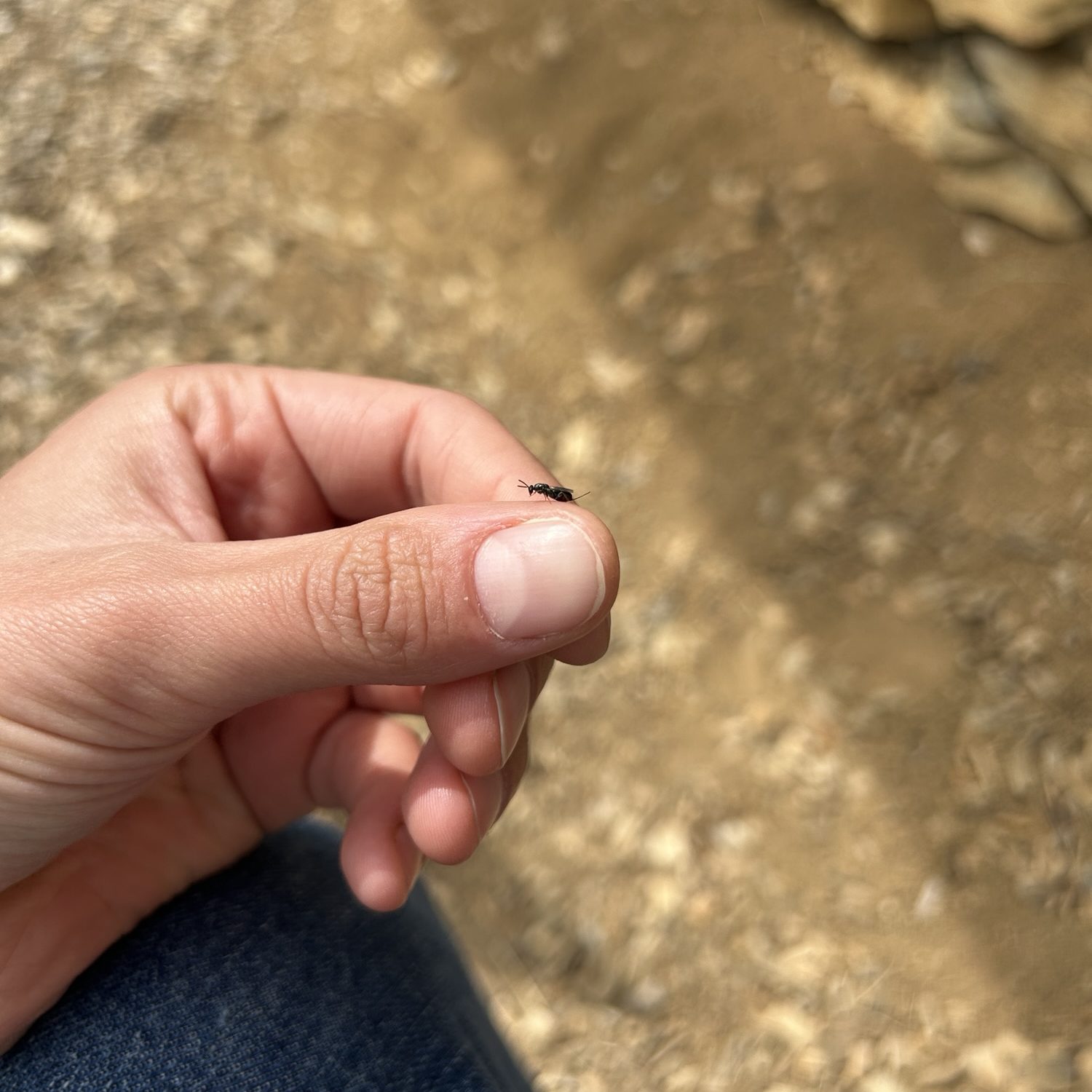
I study insect parasites of Chimney bees. I look at a small genus of small wasps called Monodontomerus. They are an “endoparasite” meaning their mother lays them inside of a bee in their larval stage and the baby wasps will eat the bee from the inside out. It’s crazy. With how diverse parasites are, I am also interested in any of the parasites that we find in Chimney bees, including other bees, beetles, and flies.
current
field season 2026
June 2026: My work has taken me down to the Smokies in Tennessee! Here I am continuing the work I did in Virginia and looking to answer two main questions: 1) How much time does it take them to build a nest? and 2) How does living close to each other impact how often they get parasitized? I will be here for the next few of weeks continuing to collect data at a couple of aggregation sites in Great Smoky Mountains National Park!
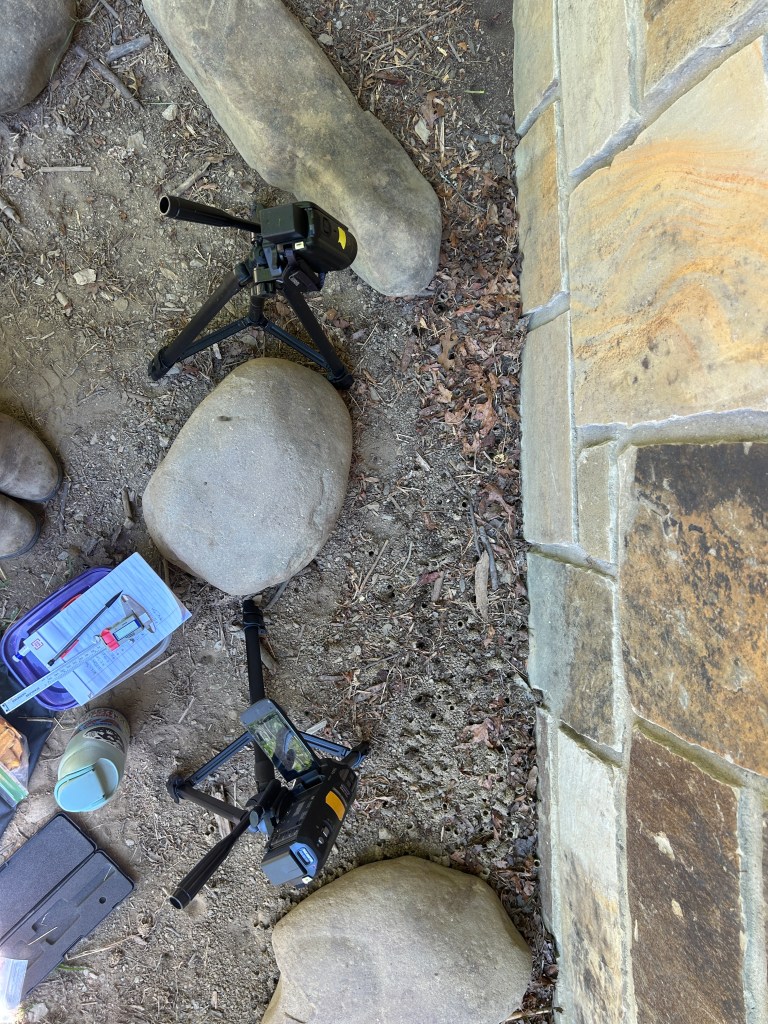
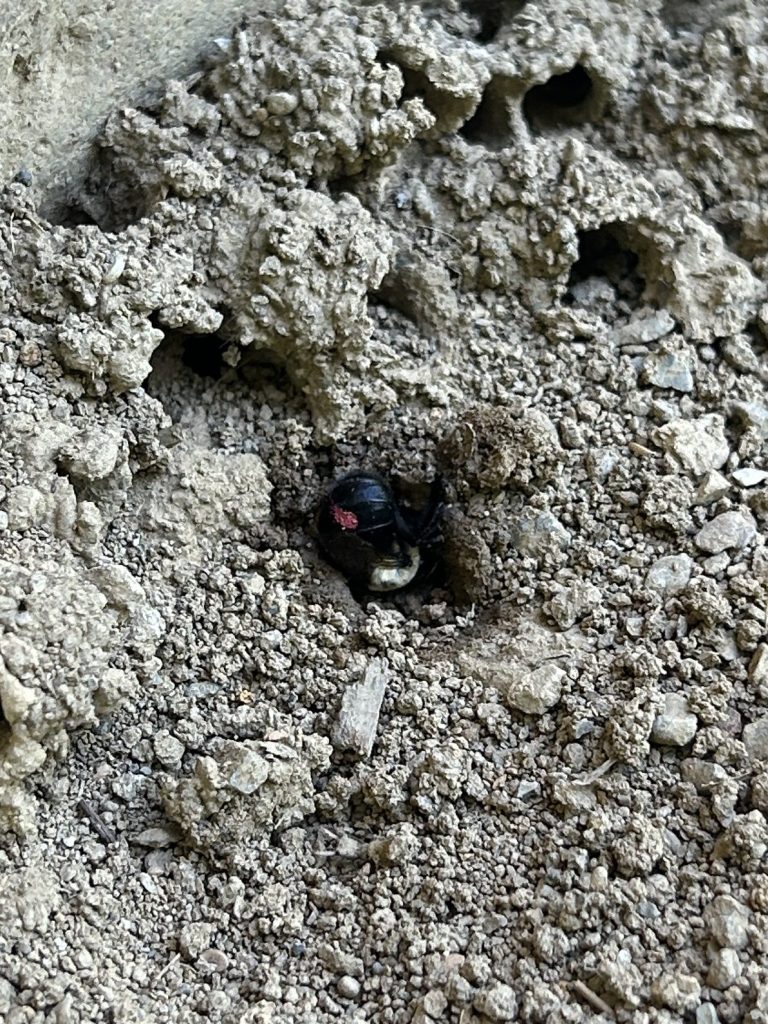
For question 1, I am filming bees and marking bees to figure out how far they can dig in a hour (See pictures to above!)
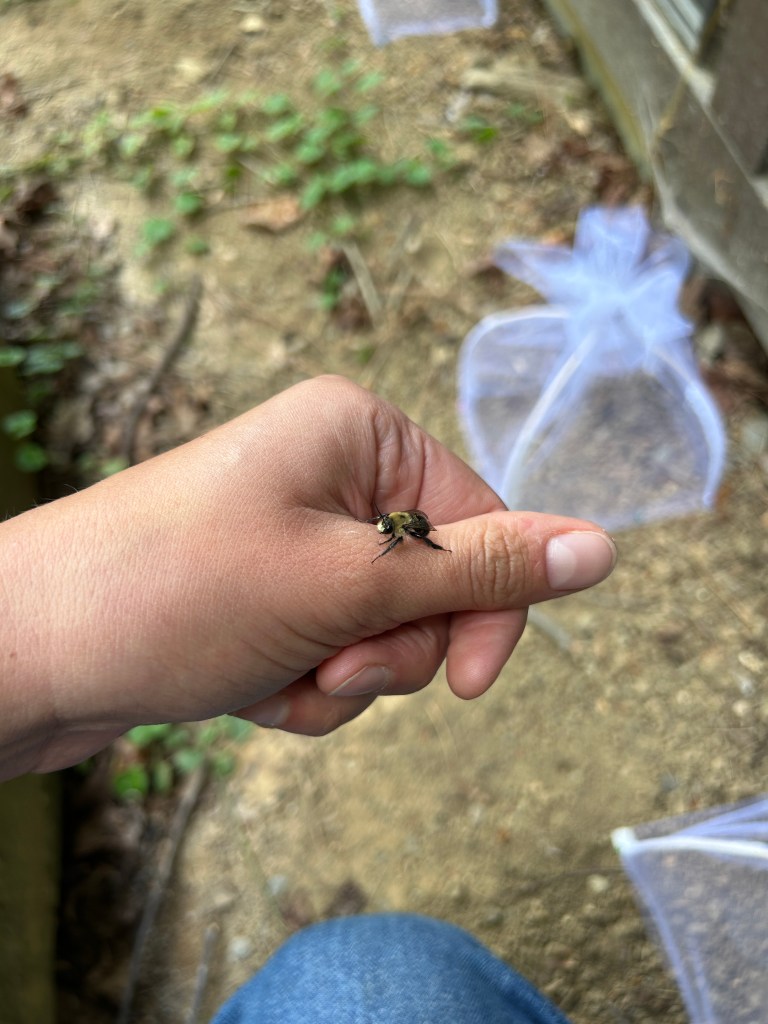
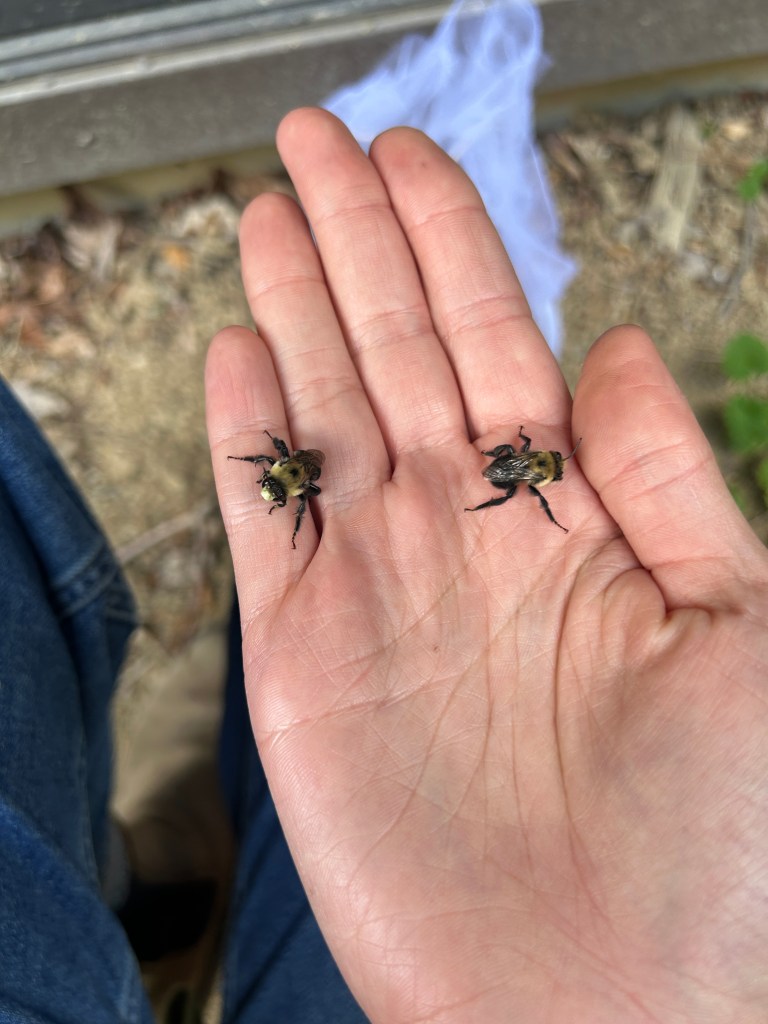
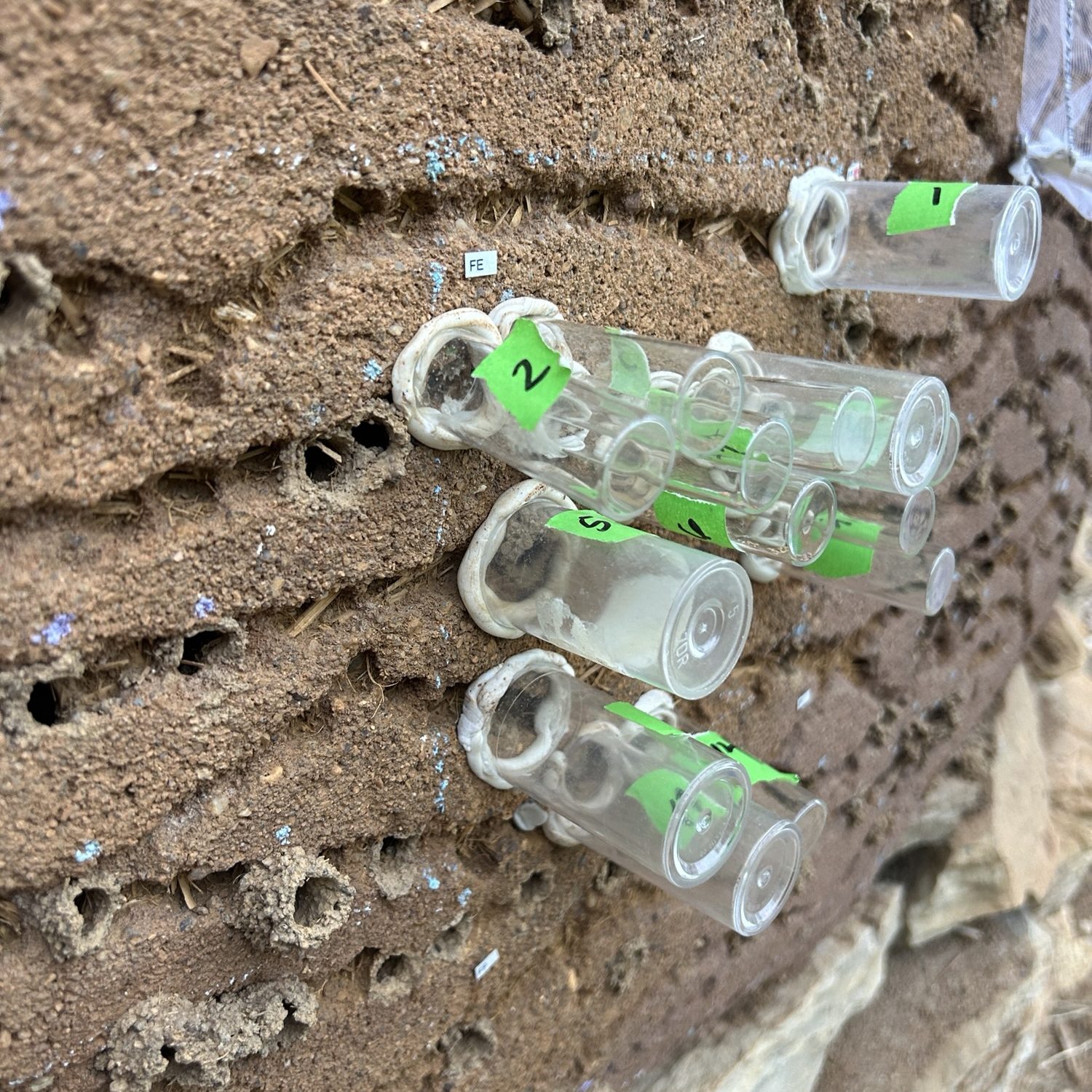
For question 2, I am using emergence traps to count how many bees and parasites emerge from the ground (read more below about how I did this in Virginia!)
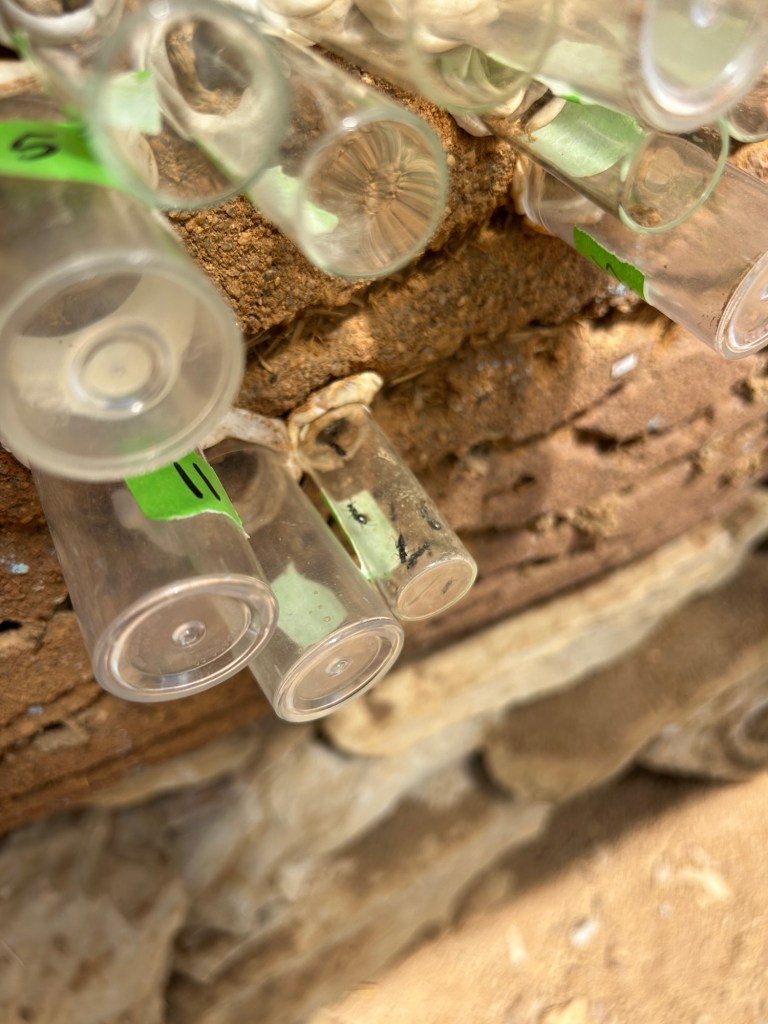
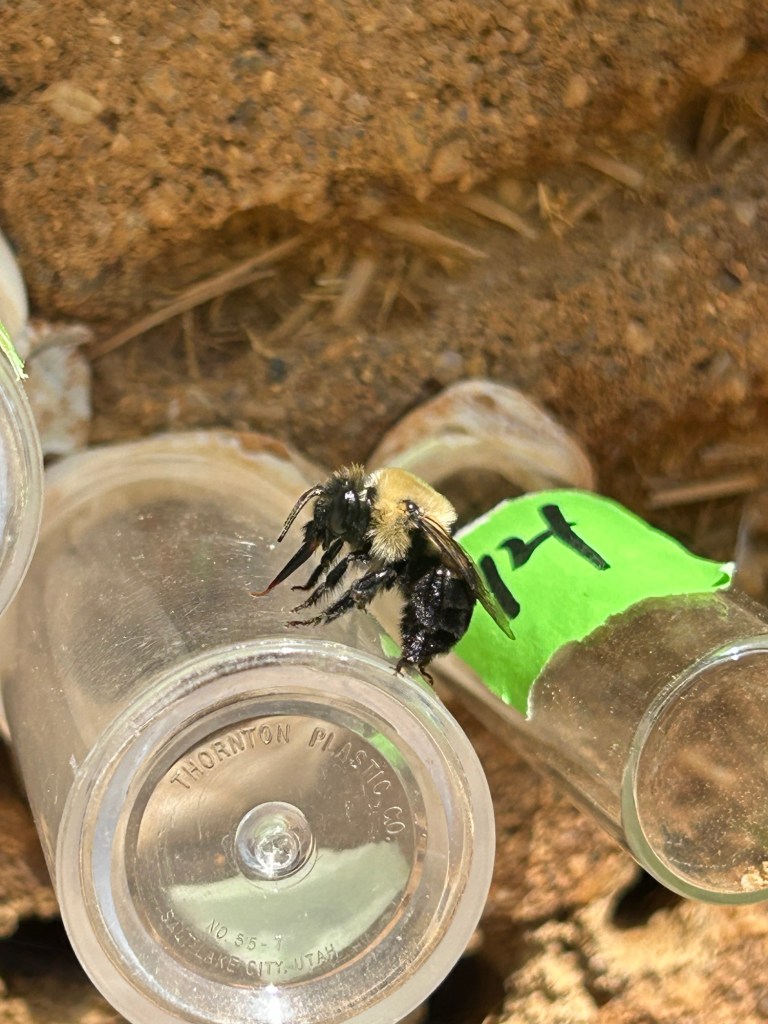
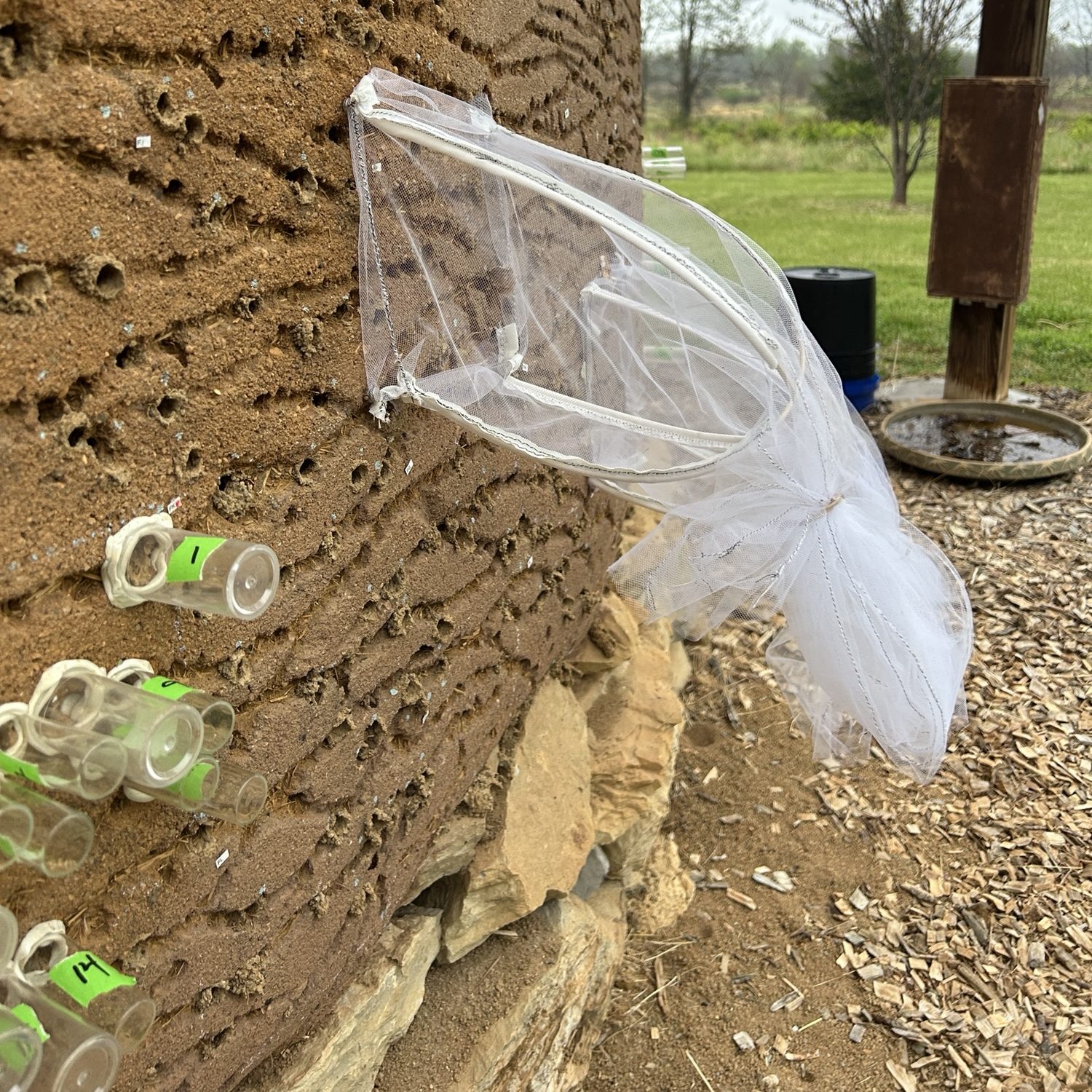
April 2026: The field season in full swing here in northern Virginia! I am currently collecting emergence data at Blandy Experimental Farm. I have placed different emergence traps on the nest. The first kind is using vials and removable putty to stick them to the wall. This allows me to have nest specific emerge data. I also have small mesh emergence tents that I made that fit over a 15x15cm square on the aggregation. I am checking on the bees every hour or so and counting how many are coming out of the nests and into these emergence traps. I will continue to collect this data until they finish emerging and then I will start monitoring nesting behavior.
spring 2026
After defending my dissertation proposal in January, I am now working on exploring and testing techniques in the lab that I plan to use in the fall after my summer field season. I am learning how to perform DNA extractions and test the structural integrity of nests constructed by the Chimney Bee.
trap nests
summer 2024
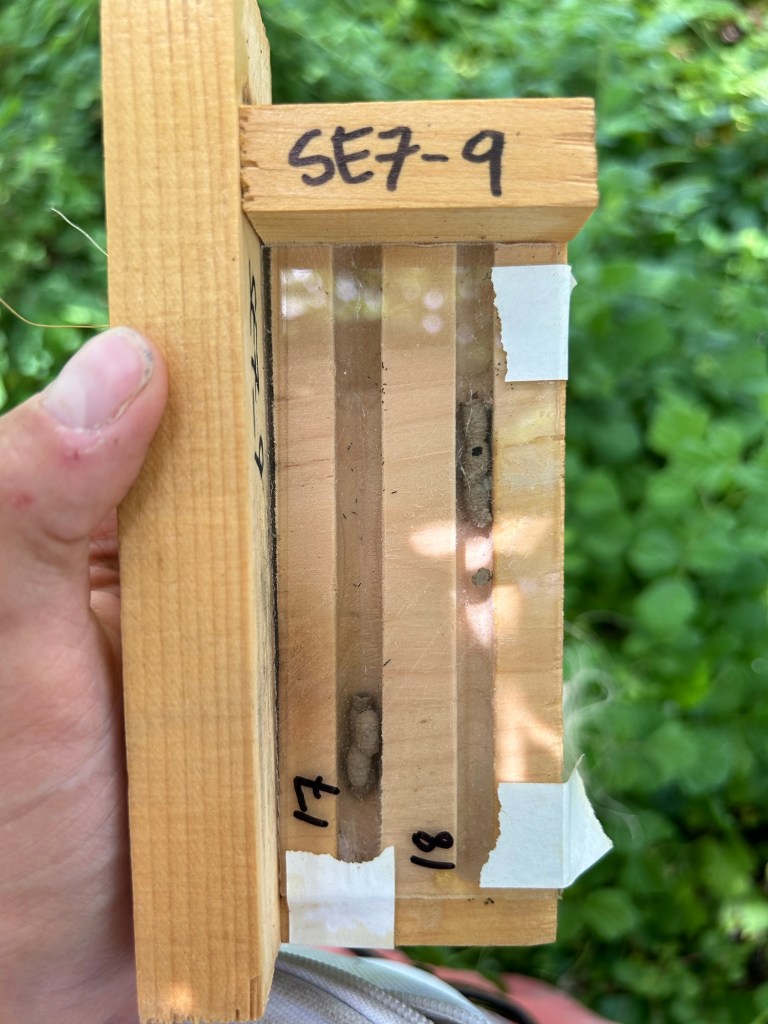
During my first summer of grad school, I collected an extensive dataset looking at how the contents of trap nests changed throughout the summer. Trap nests (commercially called Bee Hotel) are a method used to passively sample solitary bee and wasp communities that nest in cavities. They are generally put out in early spring and then collected at the end of the season. My research goals during my first summer were to explore how density of available nests impacted the frequency of parasitism in nests (duplexes vs. apartment complexes). Turns out, parasitism happens pretty infrequently and instead I was left with a thorough dataset that showed how occupancy of these nest changes throughout the season. That is what I am working on now.
I am now looking at this data to explore:
- How does community composition within a trap nest change over the season?
- Do the number of nests created change over a season? How does this vary with species?
- Do different nest box sized have different levels of occupancy? (both of target and non target groups)
- How does predation deplete the number of species of interest’s offspring throughout the season?
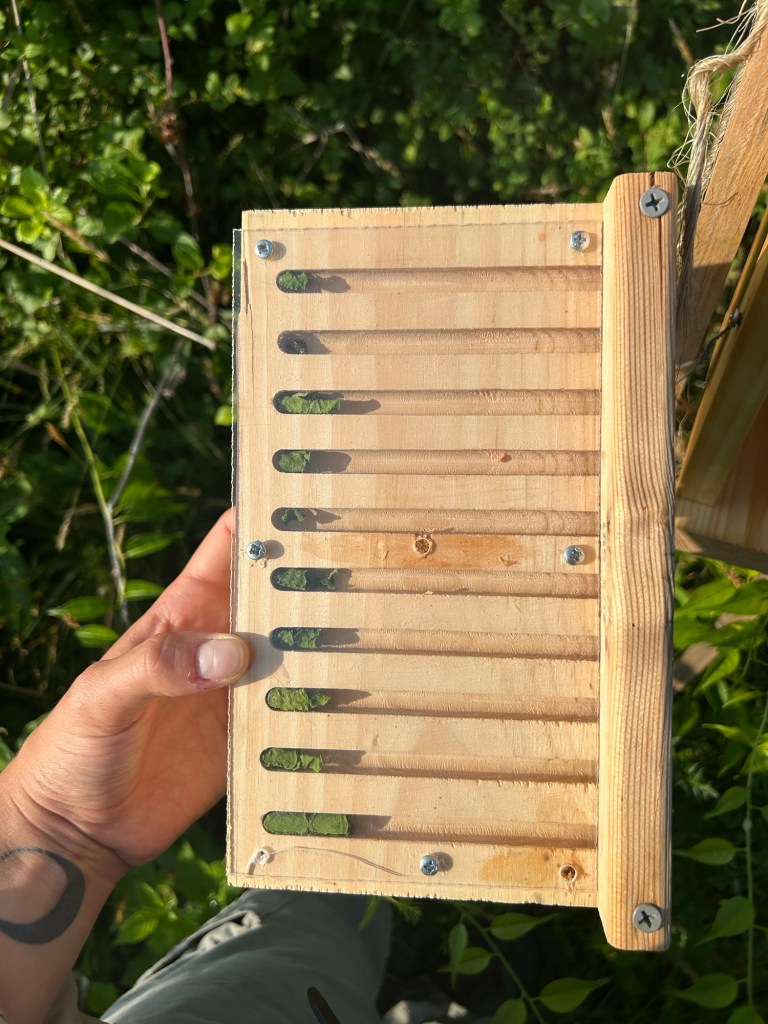
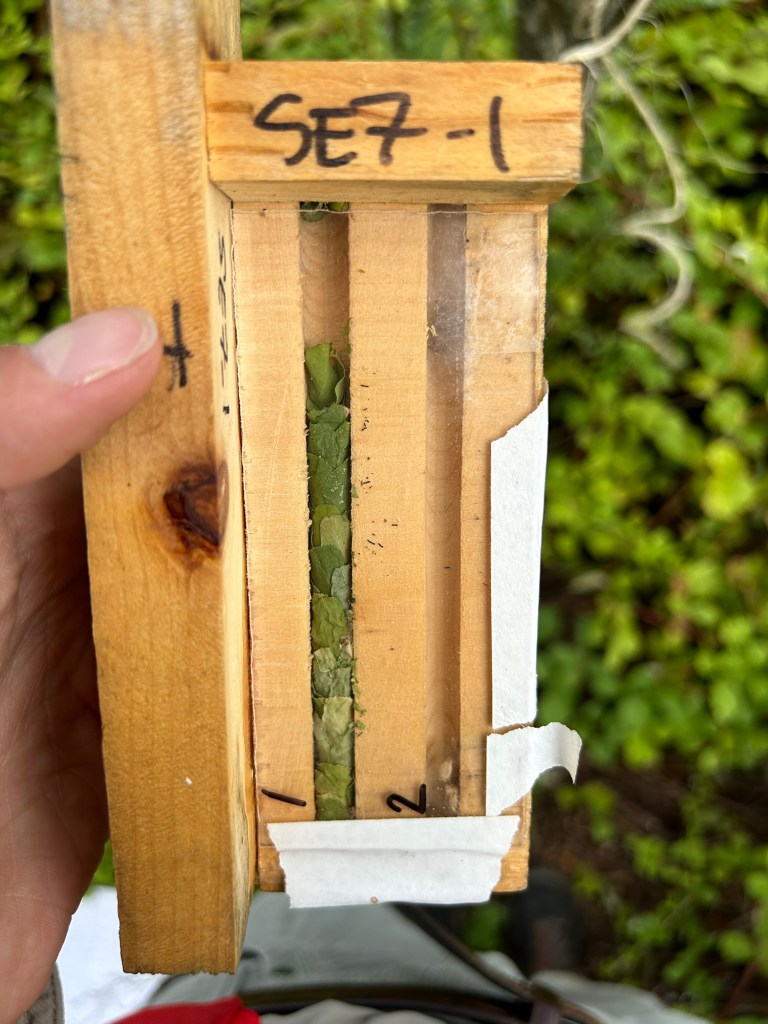
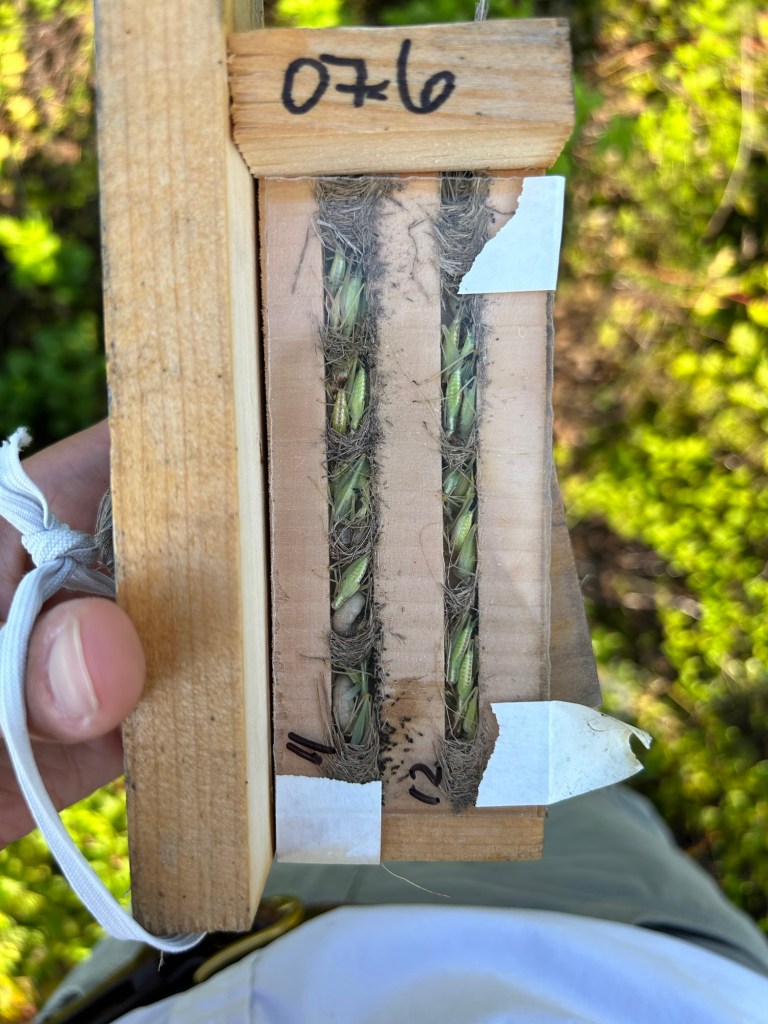
Who was living in the nests?
Grass Carrying Wasp (Isodontia mexicana)
Mason Bee
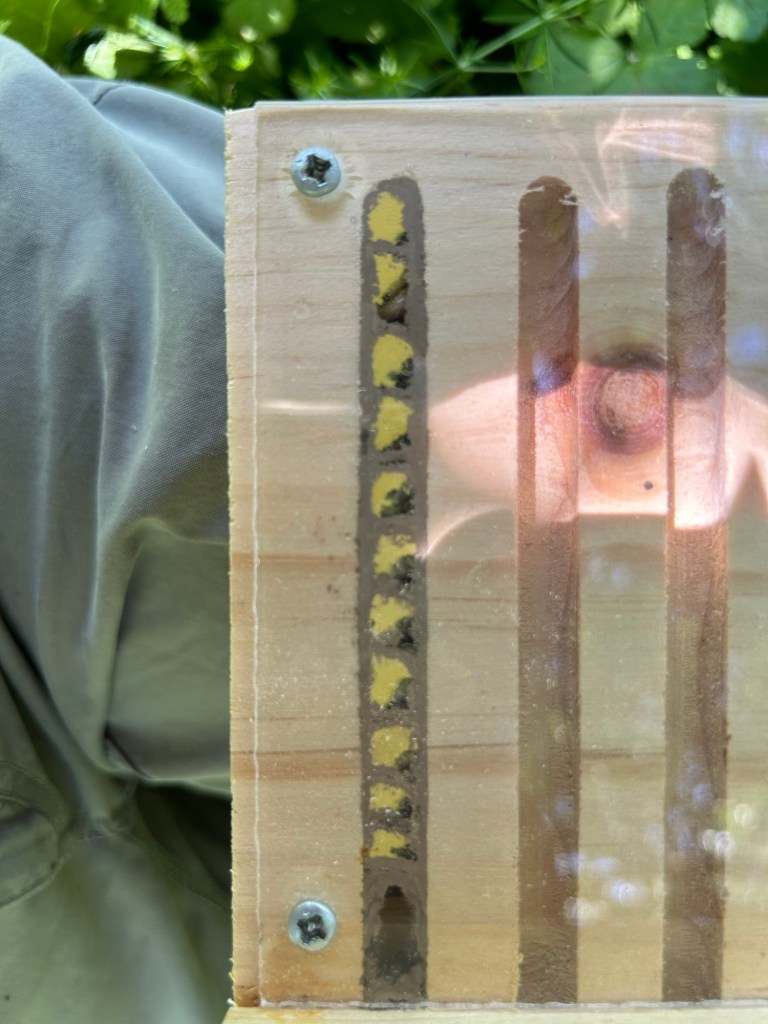
Spider Wasp
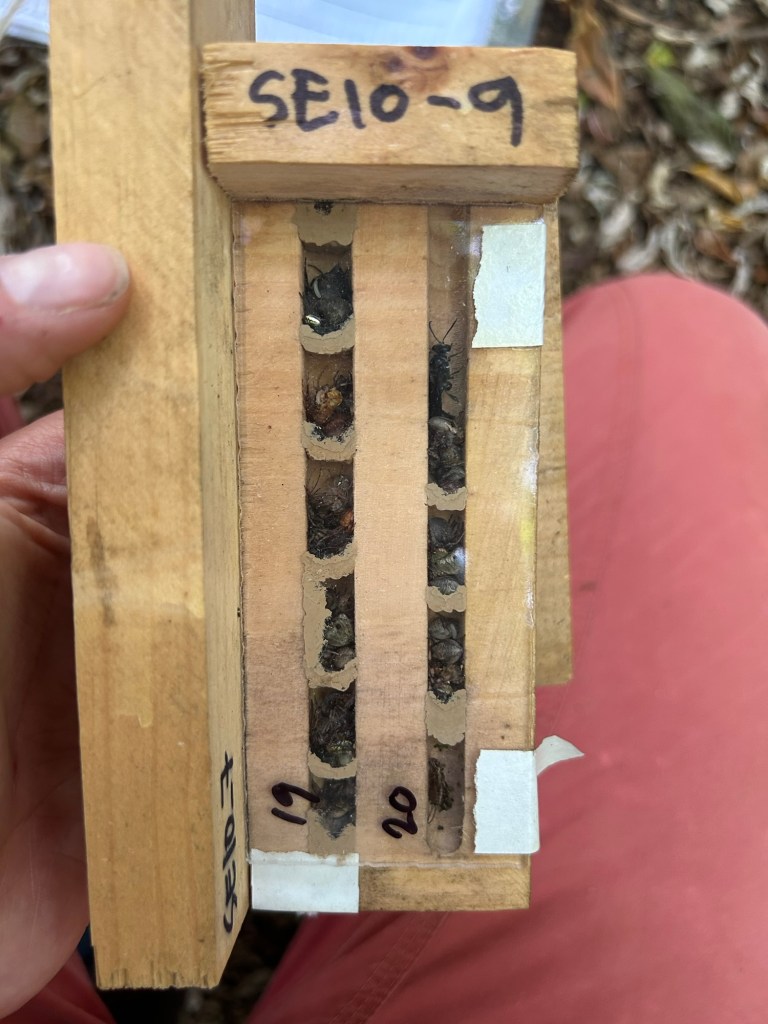
Mason Wasp
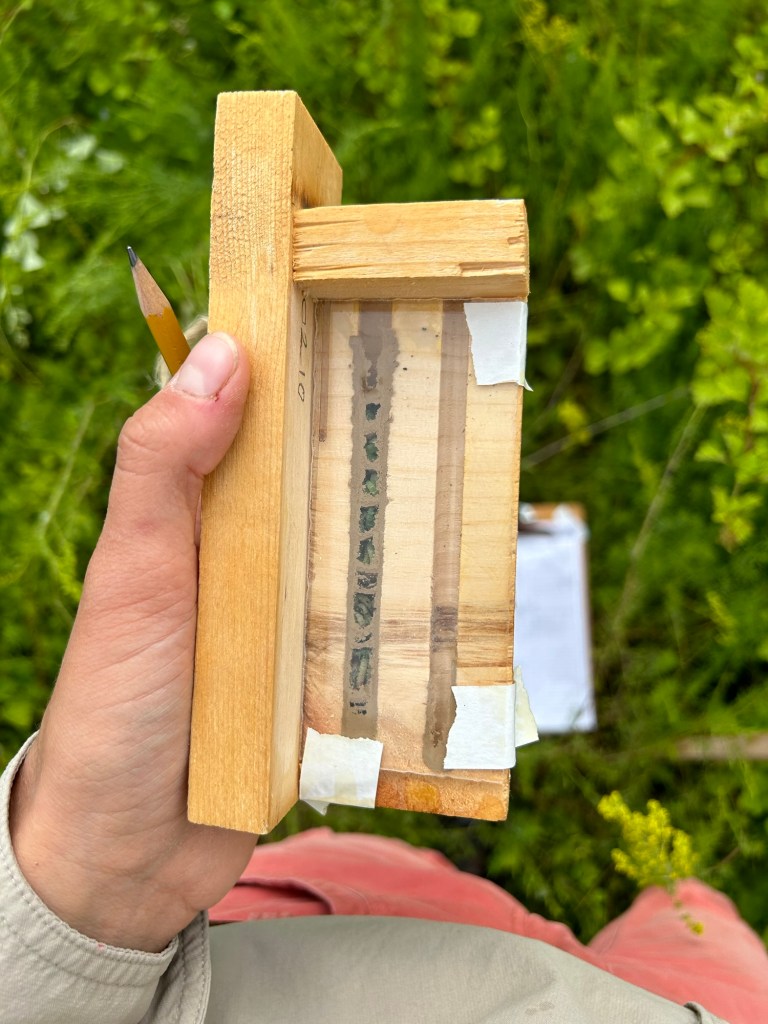
Leaf Cutting Bee
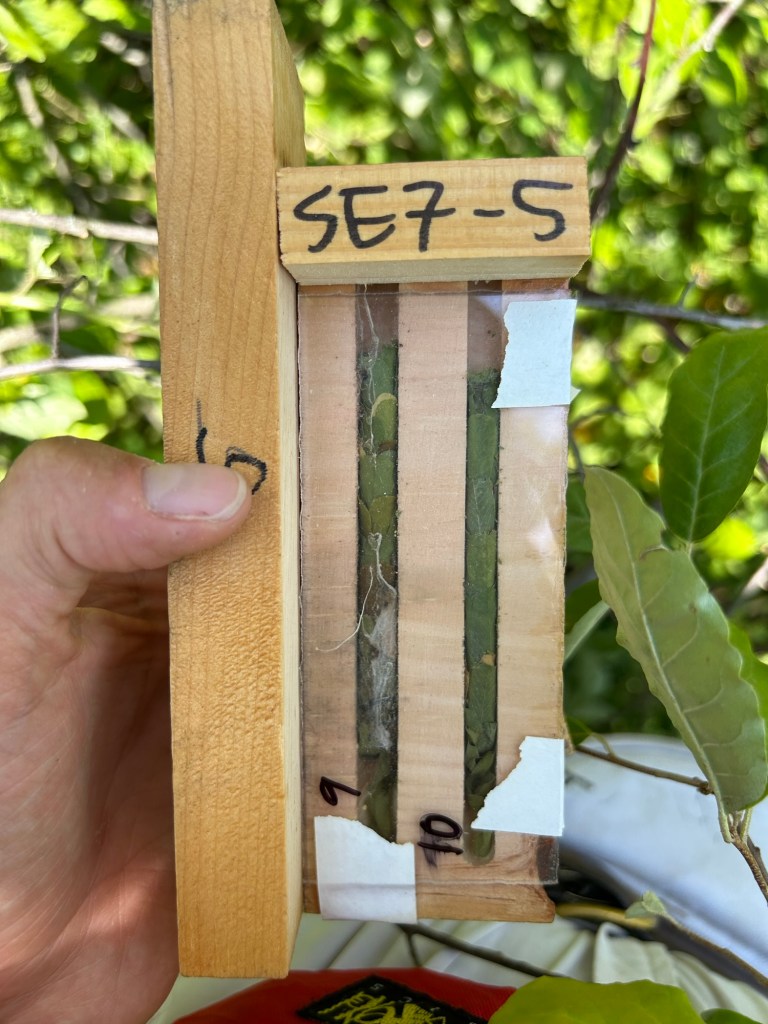
Pottery Wasp
 willow lovecky