dissertation
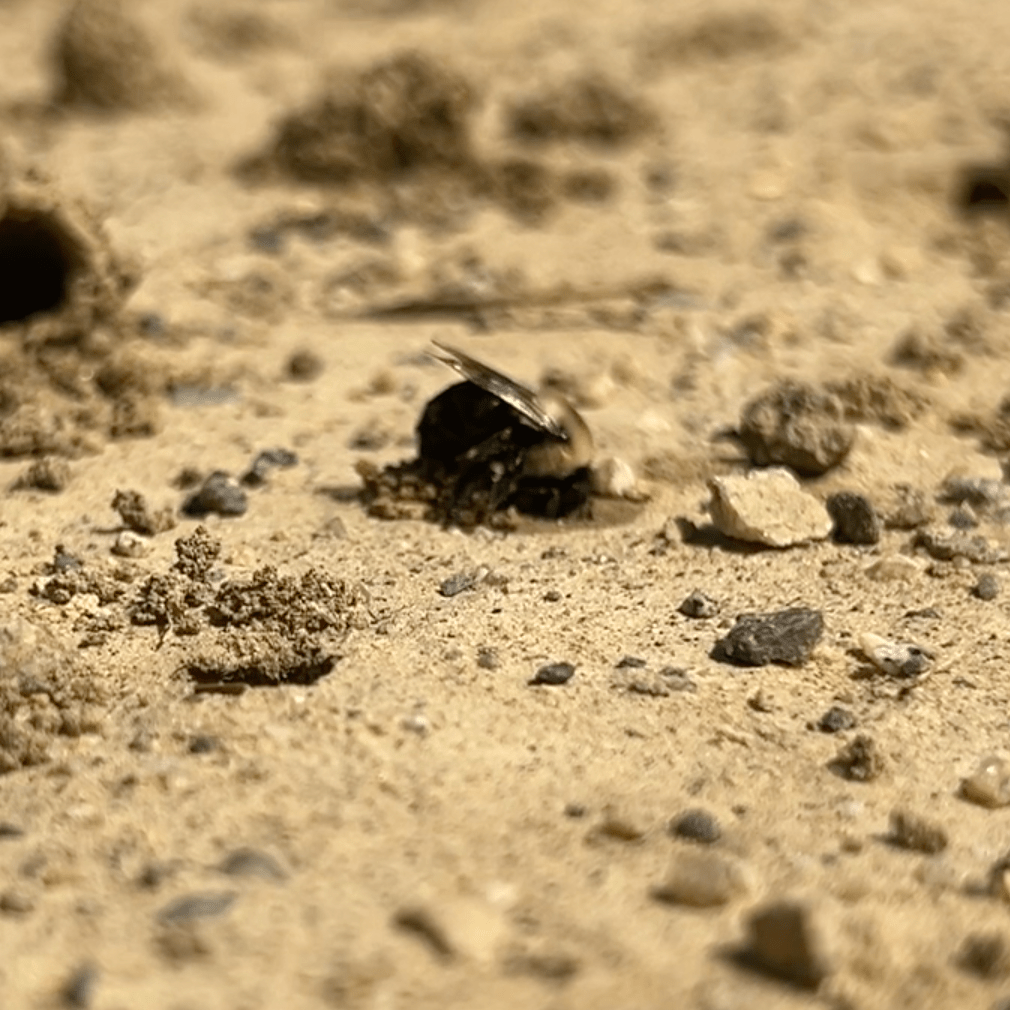
My dissertation research is interested in nest building and the behaviors associated with them in bees. I am focused on the relationships between nesting cost, group-living, and parasitism. My study system is Anthophora abrupta, the Chimney Bee.
study system: Chimney Bee, Anthophora abrupta
“At a busy season when many of these huge bees are bustling about with very audible hum and zip, the entire village with its many wonderful towers and industrious citizens form a spectacle which is in itself quite capable of overawing any but the most unemotional individual.” (Rau, 1929a)
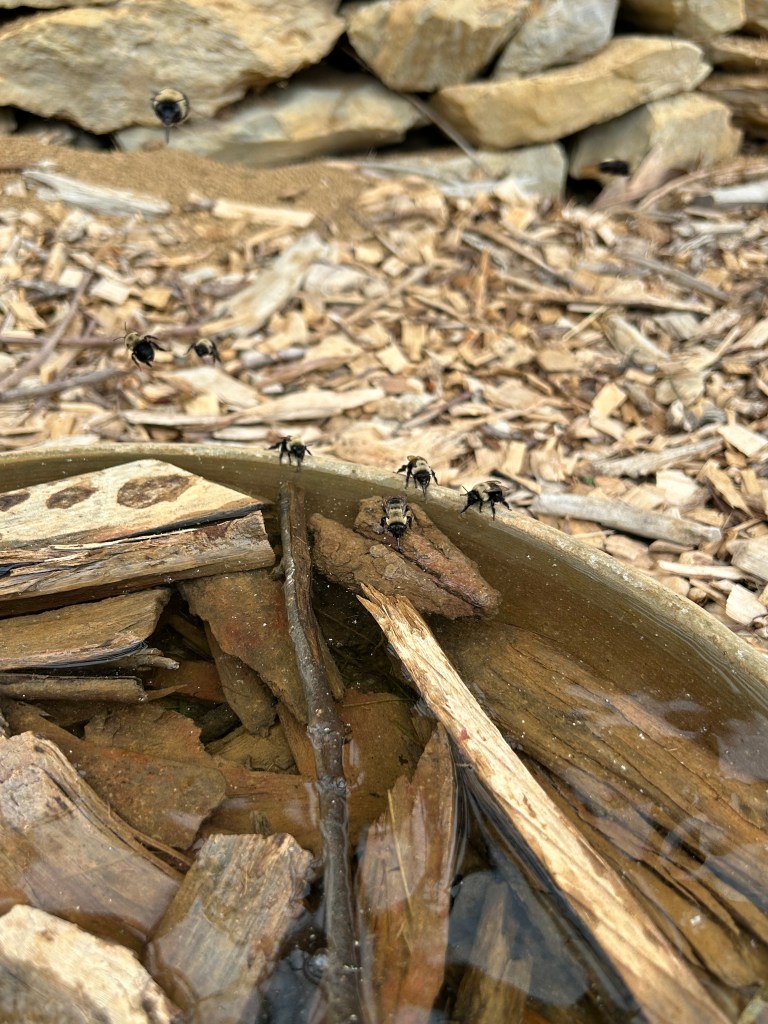
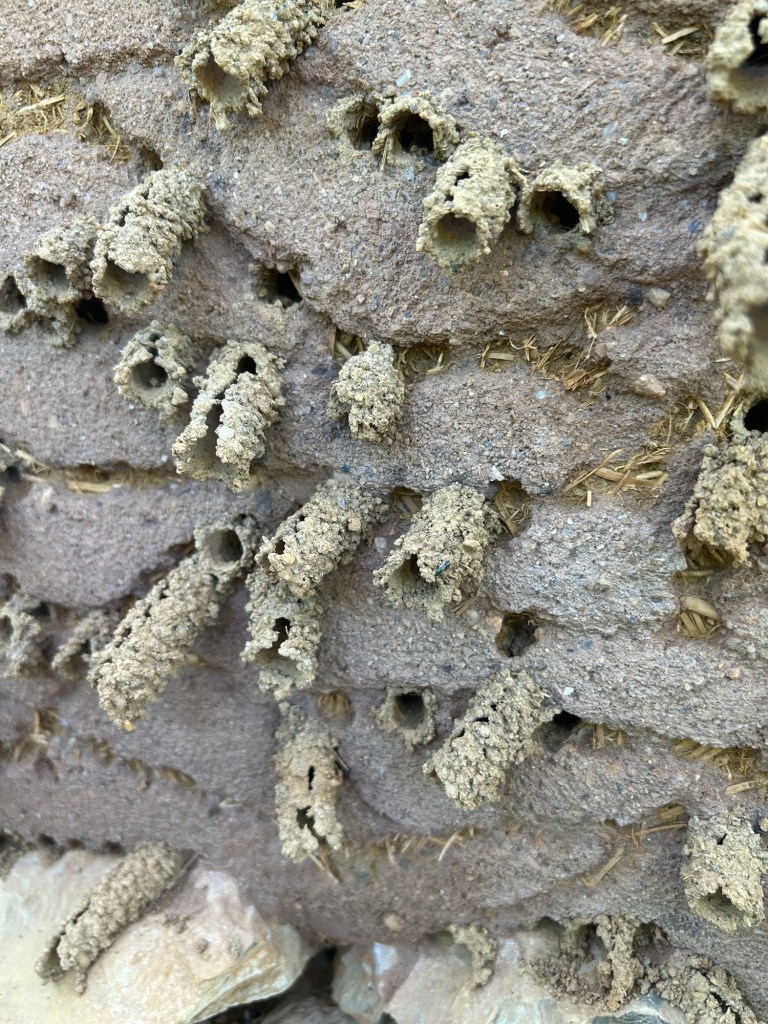
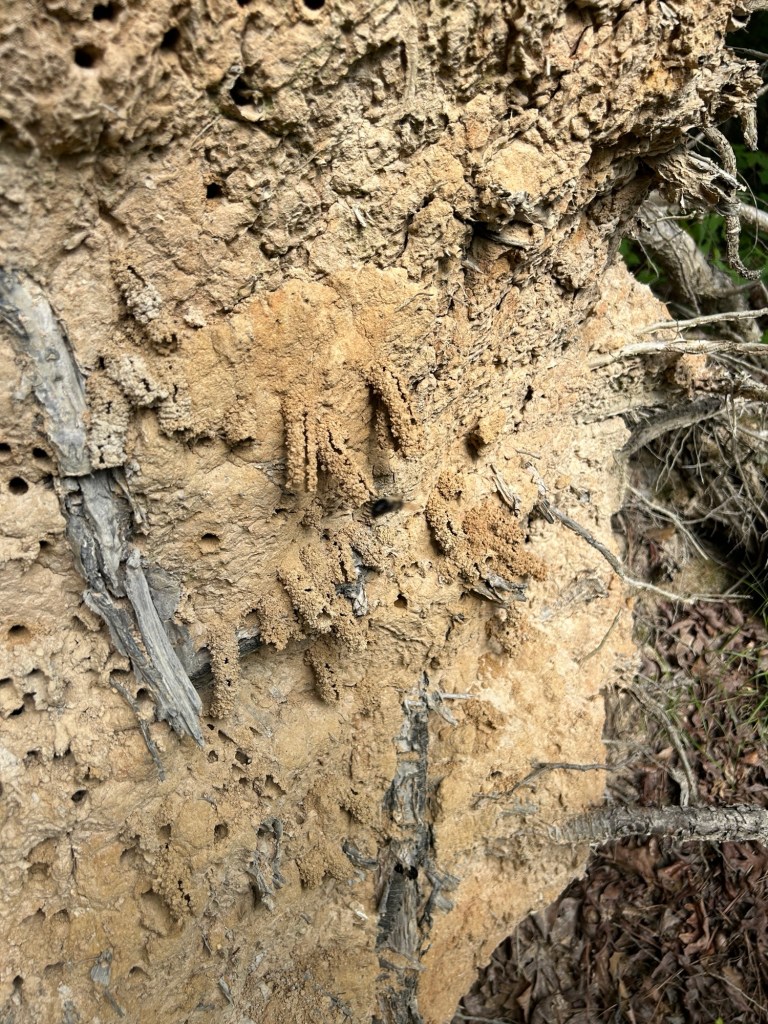
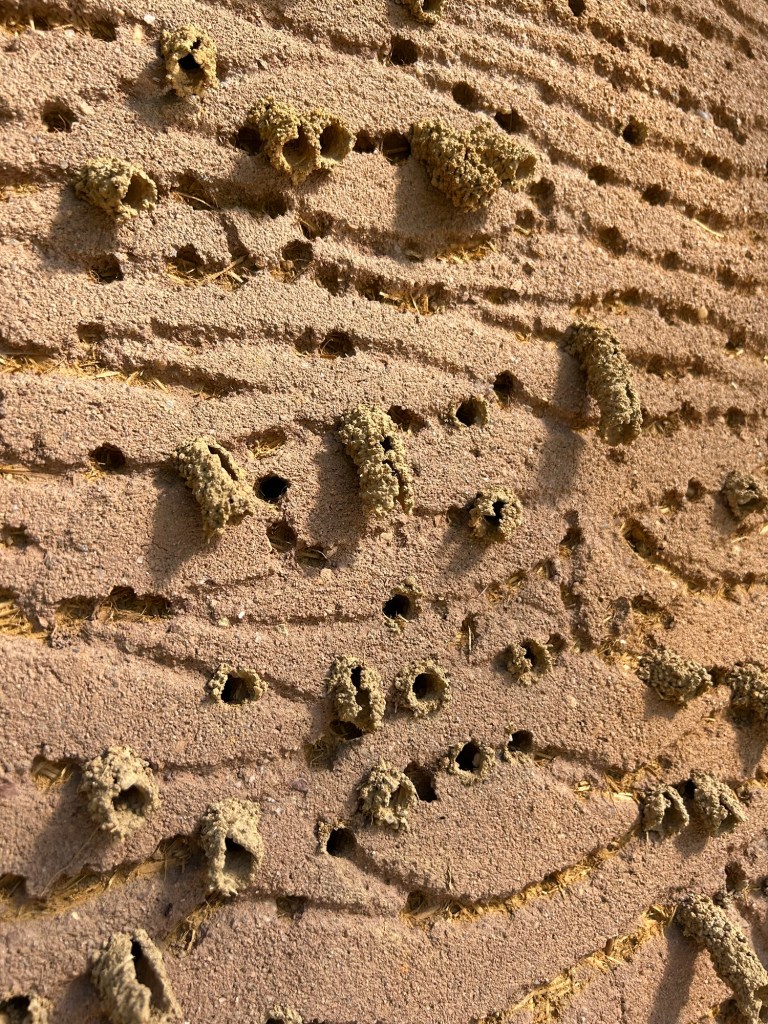
Anthophora abrupta is a species of bee in the family Apidae. They are solitary ground nesting bees that nest in large aggregations and only have one generation per year. The aggregations they form can be long lived, maintaining consistent occupation for over thirty years and ranging in size. They nest in both vertical and horizontal substrates, making their homes in river banks, up-turned trees, and close to anthropogenic structures. The substrate they nest in is very hard, so they collect water to wet and soft the soil so they can excavate it. A. abrupta are commonly called “chimney bees” or “turret bees” because of the unique turret-chimney-like structures they build at the front of their nests. The chimneys are built by utilizing the excavated soil produced as they dig the nesting cavity. The soil is formed into small pellets that are then cemented together to form the “chimney” extension of their nest.
current
spring 2026
After defending my dissertation proposal in January, I am now working on exploring and testing techniques in the lab that I plan to use in the fall after my summer field season. I am learning how to perform DNA extractions and test the structural integrity of nests constructed by the Chimney Bee.
trap nests
summer 2024
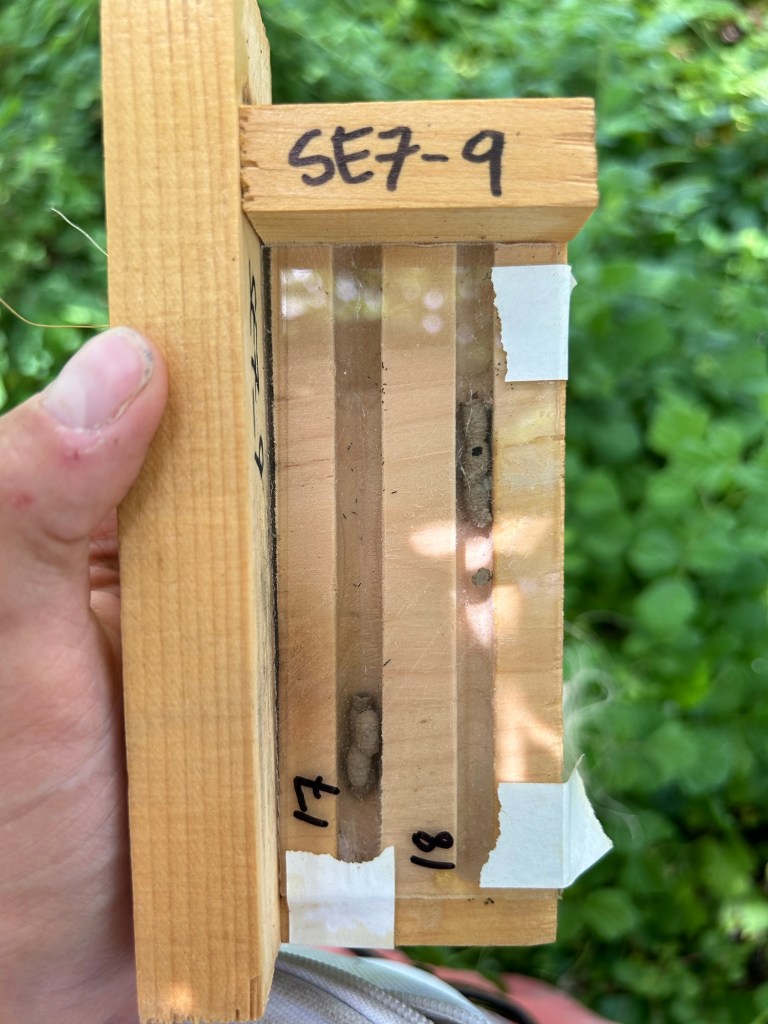
During my first summer of grad school, I collected an extensive dataset looking at how the contents of trap nests changed throughout the summer. Trap nests (commercially called Bee Hotel) are a method used to passively sample solitary bee and wasp communities that nest in cavities. They are generally put out in early spring and then collected at the end of the season. My research goals during my first summer were to explore how density of available nests impacted the frequency of parasitism in nests (duplexes vs. apartment complexes). Turns out, parasitism happens pretty infrequently and instead I was left with a thorough dataset that showed how occupancy of these nest changes throughout the season. That is what I am working on now.
I am now looking at this data to explore:
- How does community composition within a trap nest change over the season?
- Do the number of nests created change over a season? How does this vary with species?
- Do different nest box sized have different levels of occupancy? (both of target and non target groups)
- How does predation deplete the number of species of interest’s offspring throughout the season?
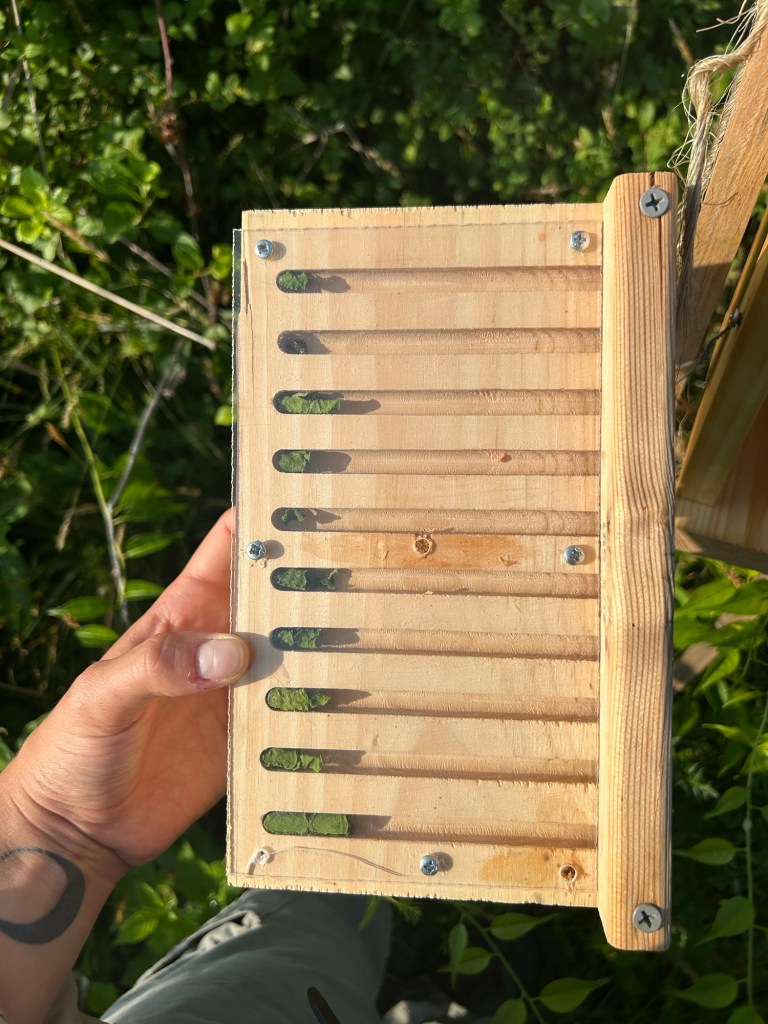
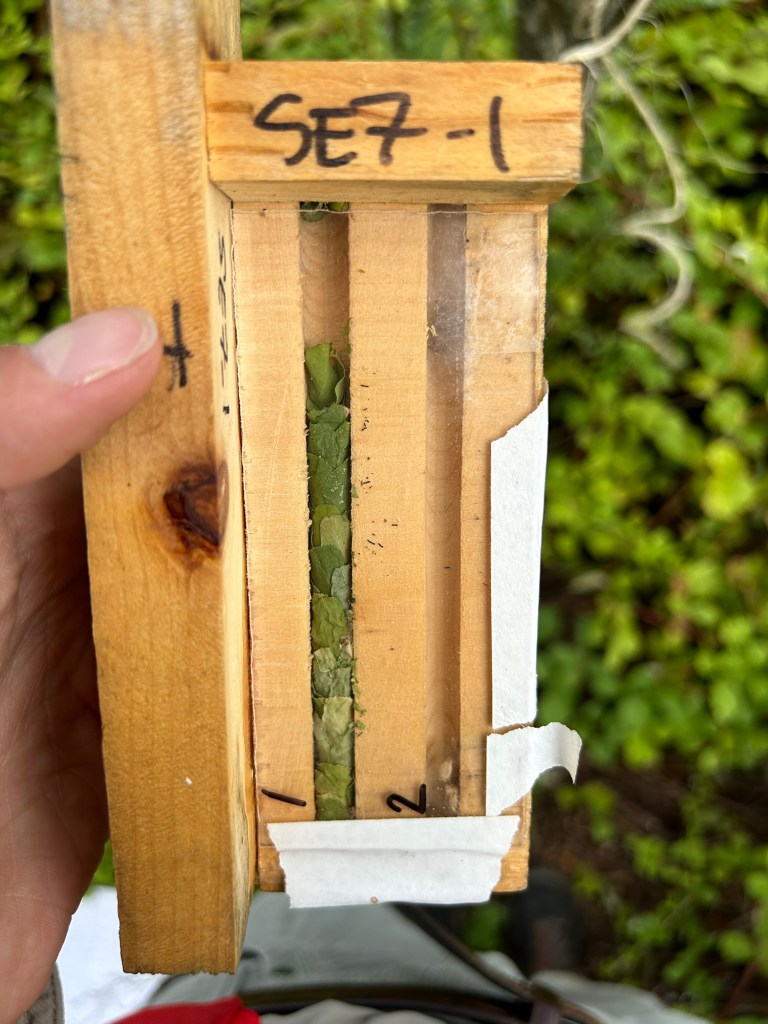
Who was living in the nests?
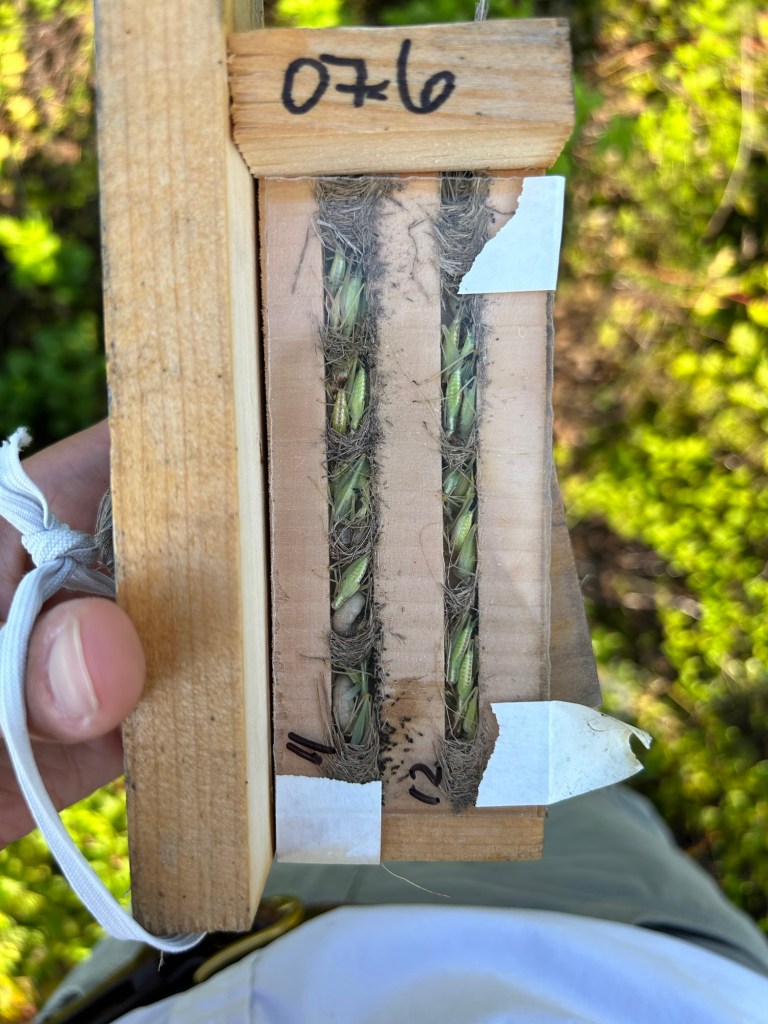
Grass Carrying Wasp (Isodontia mexicana)
Mason Bee
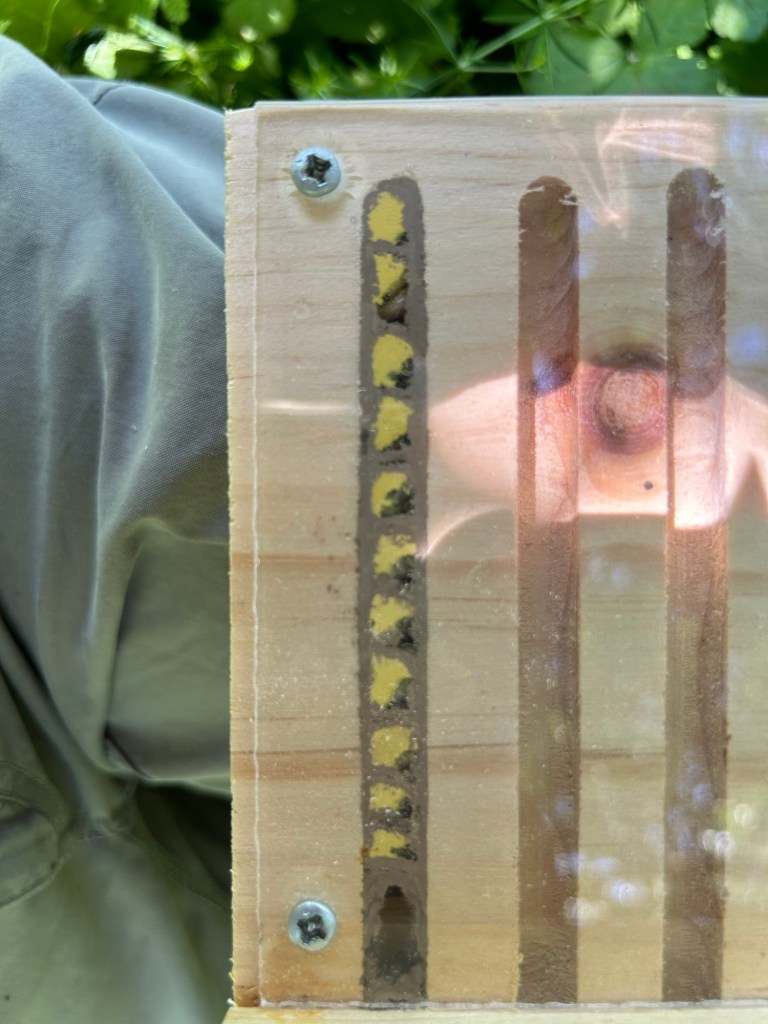
Spider Wasp
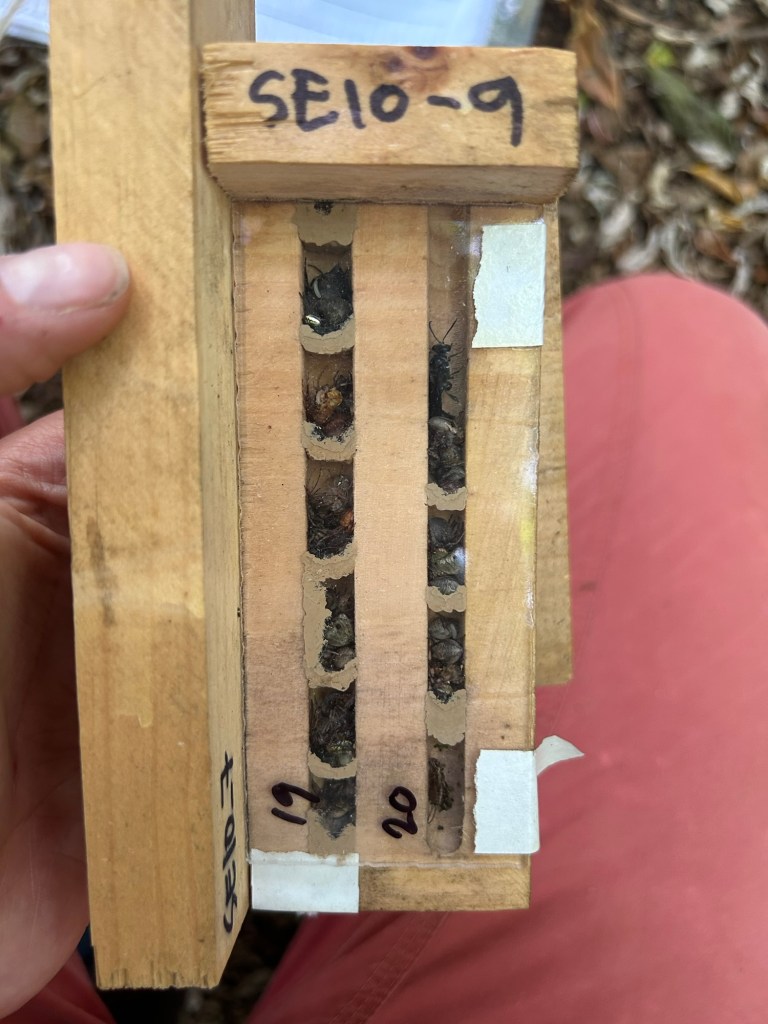
Mason Wasp
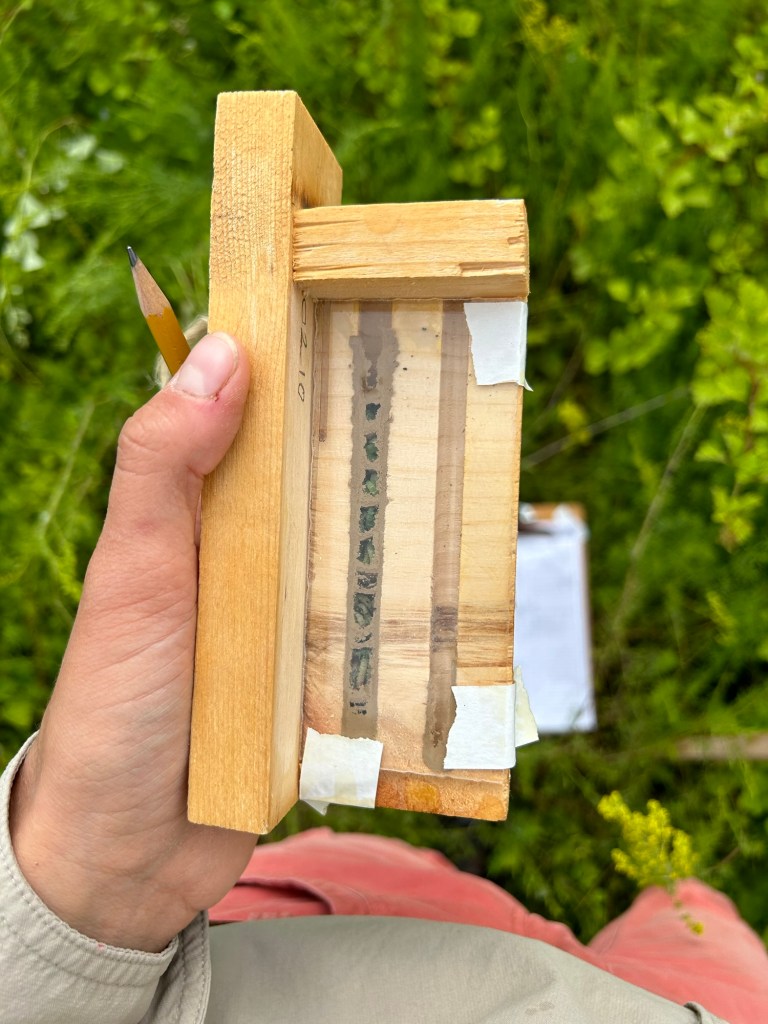
Leaf Cutting Bee
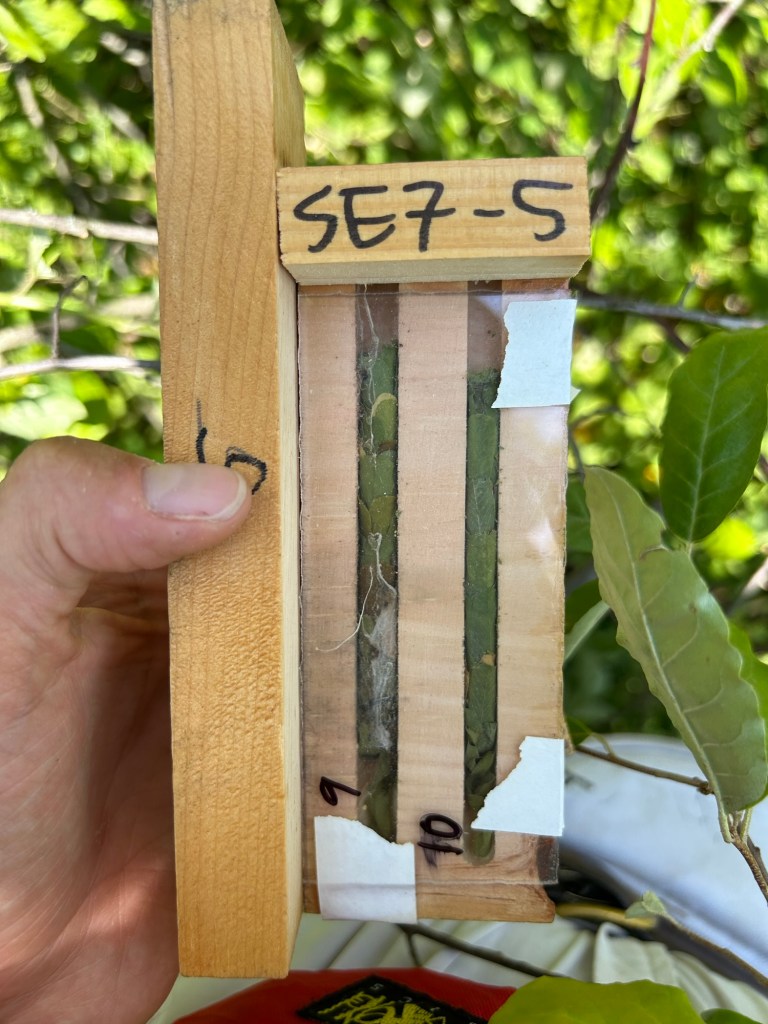
Pottery Wasp
 willow lovecky